State: Reject in writing
Washington: The Rules Your Auto Policy Must Follow
Washington makes insurers include underinsured motorist coverage and offer personal injury protection unless you reject them in writing, limits cancellations after 60 days, and sets a 20-day notice for most cancellations and every nonrenewal.
By PolicyBrook Editorial Team Updated 5-minute read
Declarations
Washington- UM/UIM rule
- Reject in writing
- Minimum liability
- 25/50/10
- Insurer cancellation notice
- 20 days (10 nonpayment)
- Nonrenewal notice
- 20 days
In brief
A Washington policy must carry at least $25,000/$50,000/$10,000 of liability coverage. Underinsured motorist coverage, which the state's insurance regulator calls uninsured/underinsured motorist coverage, comes with the policy at your liability limits unless the named insured or spouse rejects it in writing, and PIP must be offered. After 60 days, an insurer can cancel only for nonpayment or a suspended license. Cancellation takes 20 days' notice (10 days for nonpayment or in the first 30 days), and nonrenewal takes 20 days'. The Office of the Insurance Commissioner enforces these rules.
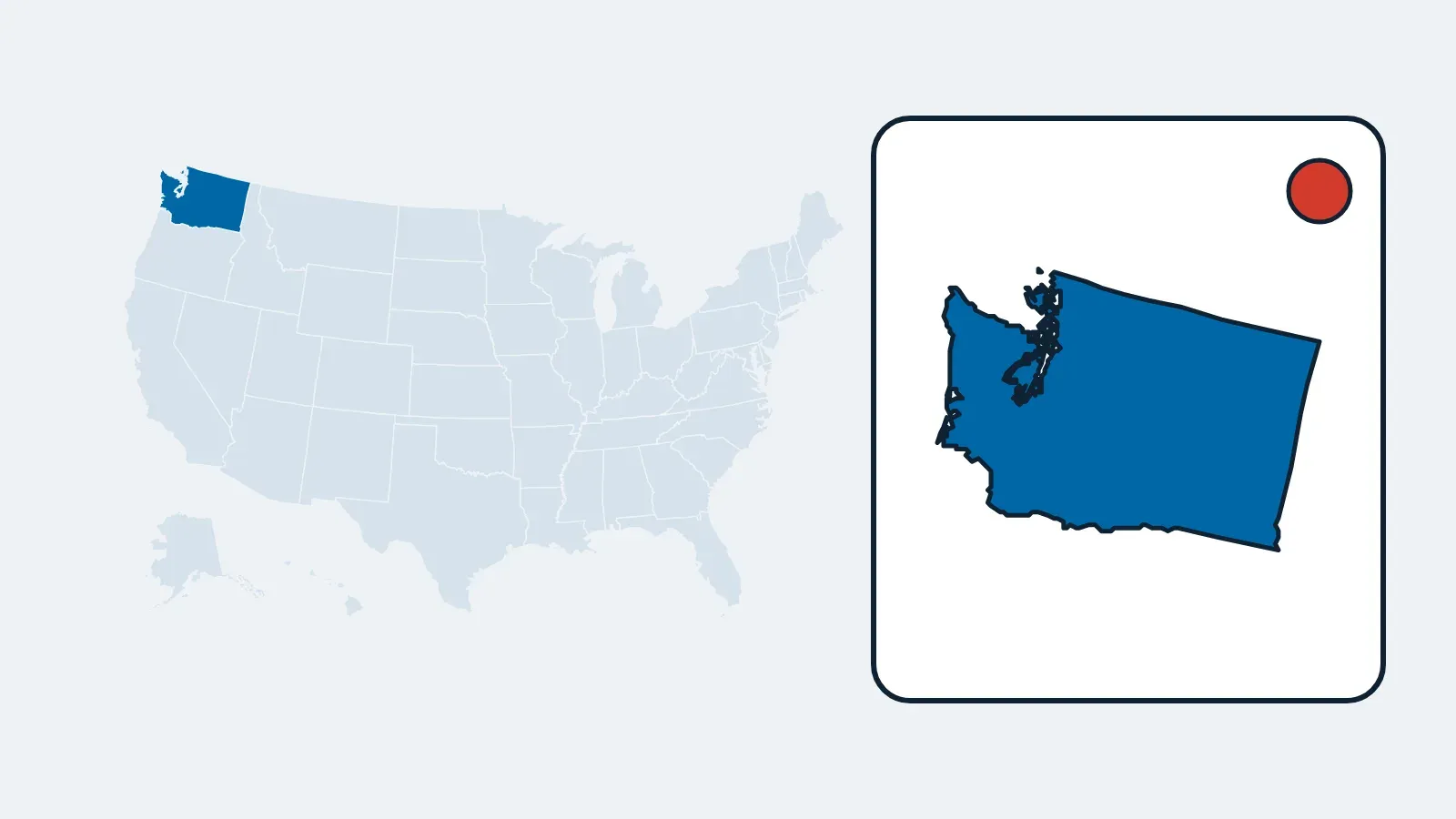
Washington policy rules
State schedule- UM coverage rule
- Reject in writing
- Minimum liability
- 25/50/10
- UM/UIM rule
- Included unless rejected in writingCovers underinsured, hit-and-run and phantom vehicles at your liability limits; PIP must be offered
- Insurer cancellation notice
- 20 days; 10 days for nonpayment or in the first 30 daysAfter 60 days, only for nonpayment or a suspended or revoked license
- Nonrenewal notice
- 20 daysThe notice must state the insurer's actual reason
- Regulator
- Washington State Office of the Insurance Commissioner
Minimum limits and proof in Washington
RCW 46.30.020 makes it illegal to drive a car that must be registered in Washington without liability insurance at the limits in RCW 46.29.090: $25,000 for one person's injuries, $50,000 for all injuries in one accident, and $10,000 for property damage. The $10,000 property limit may not cover a newer car; check the gap with the limits gap worksheet.
You must show proof when an officer asks. The same section lets you show it on a portable electronic device, and the officer may look only at the proof of coverage. You carry the risk if the device is damaged while you hand it over.
Underinsured motorist coverage and PIP
RCW 48.22.030 requires a policy on a car registered or garaged in Washington to include coverage for injuries caused by underinsured, hit-and-run and phantom vehicles, at the same limits as your liability coverage. The named insured or spouse may reject all or part of it in writing. Once rejected, it does not come back at renewal unless a named insured asks for it in writing.
RCW 48.22.085 treats personal injury protection differently: it is optional, but every new or renewed policy must offer it. A named insured may reject it in writing, and that rejection also carries forward to renewals and replacement policies until someone asks for PIP in writing.
| Coverage | On a new policy | To remove it |
|---|---|---|
| Underinsured motorist (bodily injury and property damage) | Included at your liability limits | Written rejection by the named insured or spouse |
| Personal injury protection (PIP) | Must be offered | Written rejection by a named insured |
For underinsured motorist property damage, the deductible cannot exceed $300 for hit-and-run or phantom vehicles and $100 in other cases. See Part C and personal injury protection for what each pays.
When a Washington insurer can cancel your policy
RCW 48.18.291 governs private passenger auto policies. The insurer must mail written notice, with the reason, to your latest address at least 20 days before the cancellation, or 10 days when the reason is nonpayment or the policy is in its first 30 days. Once the policy has been in effect 60 days, a cancellation notice is valid only for:
- Nonpayment of the premium or an installment when due.
- Suspension, revocation or cancellation of the driver's license of the named insured or a regular operator during the policy period (or, for a renewal, in the 180 days before it took effect).
When an insurer cancels, RCW 48.18.290 requires the unearned premium to be figured pro rata and paid or mailed within 45 days after the notice of cancellation on a private passenger auto policy. The cancellation refund worksheet shows the math.
Renewal and nonrenewal in Washington
Under RCW 48.18.292, an insurer that will not renew must give written notice at least 20 days before the policy expires, stating its actual reason. A renewal offer must list the premium due, any change in premium or deductibles, and the due date. Auto policies under this law cannot be written for less than six months.
An insurer may not refuse to renew your liability or collision coverage because you filed comprehensive, road service or towing claims, though it may drop those particular coverages for that reason.
- Read the reason on the notice. Washington requires the actual reason in writing.
- Call the Insurance Commissioner's consumer advocacy line at 800-562-6900 if the reason or the timing does not match the rules above.
- Replace the policy before it ends. See lapse and reinstatement for why a gap matters.
Policyholder questions
Do I have to buy PIP in Washington?
No. Insurers must offer it on every new or renewed policy, but a named insured can reject it in writing. The rejection carries forward until you ask for PIP in writing.
How much notice does a Washington insurer give before cancelling?
At least 20 days, or 10 days for nonpayment or during the first 30 days. After 60 days, only nonpayment or a suspended or revoked license allow a cancellation.
Can I show proof of insurance on my phone in Washington?
Yes. State law lets you show it on a portable electronic device, and the officer may view only the proof of coverage.
Sources
- RCW 48.18.291 — Cancellation of private automobile insurance
- RCW 48.18.292 — Refusal to renew private automobile insurance
- RCW 48.18.290 — Cancellation by insurer, unearned premium
- RCW 48.22.030 — Underinsured, hit-and-run and phantom vehicle coverage
- RCW 48.22.085 — Personal injury protection, offer and rejection
- RCW 46.30.020 and 46.29.090 — Mandatory liability insurance and minimum limits
- Washington Legislature — Senate bill report, SSB 5798 (2024), as amended by the House
- Washington State Office of the Insurance Commissioner — What auto insurance do I need?
Facts on this page were checked against these sources on November 15, 2026. The 60-day notice that Washington adopted for many property and casualty policies from July 1, 2025 does not apply to private passenger auto.
Request policy quotes
Answer six questions about the policy you need. PolicyBrook passes the request to licensed insurance agents and insurers who can quote it; you compare and decide.
- The policy you need. Cars, drivers, coverage and ZIP.
- Your contact details and consent to be contacted.
- A licensed insurance agent or insurer contacts you with a quote. Nothing is bound until you sign and pay.
PolicyBrook is not paid by you. The licensed insurance agents and insurers who contact you set their own prices and terms. How we make money.
Related readings
-

Policy event
Insurer cancellation
After 60 days, only listed reasons; 10 to 60 days' notice by state, and how to appeal.
-
Policy event
Nonrenewal
Notice periods from 15 to 75 days, reasons states bar, and how to ask the regulator for review.
-
Policy part
Uninsured motorists (Part C)
Four kinds of uninsured vehicle, who is insured, limits, 60-day trial right after arbitration, state rules.