State: Reject in writing
Indiana: The Rules Your Auto Policy Must Follow
Indiana sets 25/50/25 minimum limits, makes uninsured and underinsured motorist coverage part of a new policy unless you reject it in writing, and lists the only reasons an insurer may use to cancel after 60 days. Here is how those rules apply.
By PolicyBrook Editorial Team Updated 5-minute read
Declarations
Indiana- UM/UIM rule
- Reject in writing
- Minimum liability
- 25/50/25
- Insurer cancellation notice
- 20 days (10 nonpayment)
- Nonrenewal notice
- 20 days
In brief
An Indiana policy must carry liability limits of at least $25,000/$50,000/$25,000. Uninsured and underinsured motorist coverage must be offered at your bodily injury limits and stays on a new policy unless a named insured rejects it in writing. After 60 days in force, an insurer may cancel only for the reasons in IC 27-7-6-4, with 20 days' mailed notice (10 days for nonpayment), and it must give 20 days' notice before it refuses to renew. The Indiana Department of Insurance takes complaints.
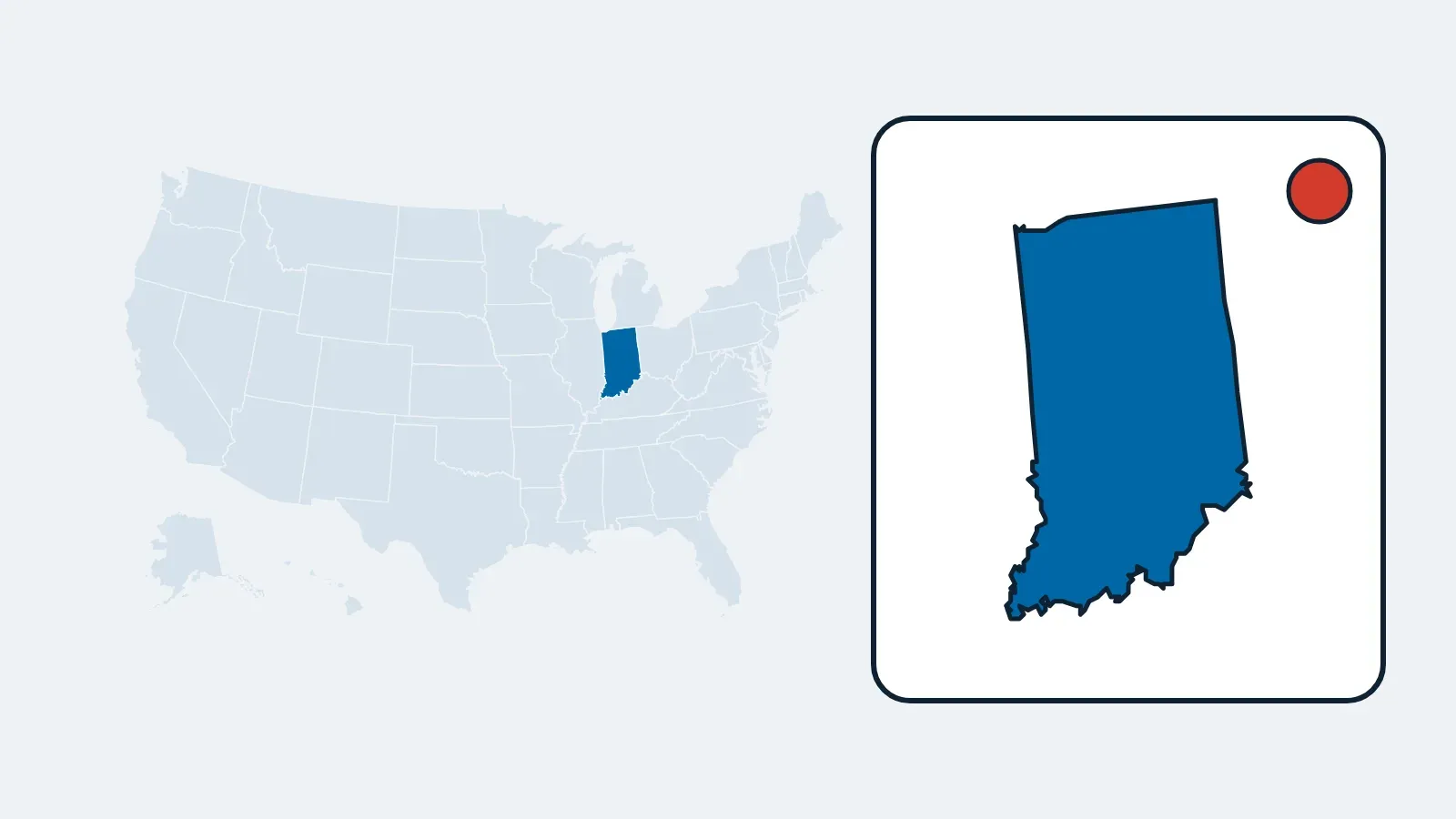
Indiana policy rules
State schedule- UM coverage rule
- Reject in writing
- Minimum liability
- 25/50/25
- UM/UIM rule
- UM and UIM included unless rejected in writingOffered at your bodily injury limits; UIM not less than $50,000
- Insurer cancellation notice
- 20 days; 10 days for nonpaymentAfter 60 days in force, only for reasons in IC 27-7-6-4
- Nonrenewal notice
- 20 daysNot needed if the insurer offered to renew or the premium was unpaid
- Regulator
- Indiana Department of Insurance
Minimum limits on an Indiana policy
The Indiana Bureau of Motor Vehicles lists the liability floor as $25,000 for injury to one person, $50,000 for injuries to two or more people in one accident, and $25,000 for property damage, written 25/50/25. That is the lowest Part A limit an Indiana declarations page may show. If the BMV asks you to verify coverage, your insurer files the proof with the bureau electronically. The limits gap worksheet shows what the minimums leave uncovered in a larger crash.
UM and UIM stay on unless you reject them in writing
Under IC 27-7-5-2, an insurer must make uninsured and underinsured motorist coverage available in every auto liability policy for a car registered or principally garaged in Indiana, at limits at least equal to the policy's bodily injury limits. The Department of Insurance puts it this way: a newly written policy includes both coverages unless you reject them in writing.
A named insured may reject both coverages, or one of them if the other is written separately. The rejection must say which coverage it covers and when it takes effect, and it binds everyone else on the policy. After that, the same insurer or an affiliate does not have to offer the coverage again at renewal unless you ask for it in writing. Read Part C before you sign.
| Coverage | Rule | Limits |
|---|---|---|
| Uninsured motorist bodily injury | Included unless rejected in writing | At least your bodily injury limits; 25/50 minimum |
| Underinsured motorist | Included unless rejected in writing | Not less than $50,000 |
| Uninsured motorist property damage | Only with UM bodily injury | At least $25,000 |
When an Indiana insurer can cancel
A new Indiana policy may be canceled during its first 60 days. After that, and on any renewal, IC 27-7-6-4 makes a cancellation notice effective only for these reasons:
- The named insured does not pay the premium or an installment when due.
- The named insured or a regular driver in the household had a license or registration denied, suspended or revoked during the policy period.
- The named insured or a regular driver is treated for epilepsy or heart disease without a doctor's certificate of safe driving ability, or uses drugs or alcohol to excess.
- An insured committed fraud or willful misrepresentation about a material fact in getting the policy or in a loss.
- An insured violated the policy's terms or conditions.
- You moved, or the car is now registered, in a place where the insurer is not licensed.
Under IC 27-7-6-5, the insurer must mail the cancellation notice at least 20 days before the cancellation date, or at least 10 days before for nonpayment, with the reason stated. When another notice leaves out the reason, it must say the insurer will give it if you ask in writing; mail that request at least 15 days before the cancellation date. If an independent agent placed the policy, the agent generally gets 10 days' warning first.
Renewal and nonrenewal in Indiana
An Indiana insurer that will not renew must mail notice to the address on the policy at least 20 days before the term ends, under IC 27-7-6-6. The notice is not required if the company has offered to renew, if the premium was not paid, or if you are moved to an affiliated company with the same or broader coverage.
Twenty days is a short window. If a nonrenewal notice arrives, start shopping right away; the nonrenewal page explains what to compare.
Where to ask and complain
- Ask for the reason in writing if the notice does not give one, at least 15 days before the cancellation date.
- Compare it with IC 27-7-6-4 and count the days between the mailing date and the effective date.
- File a complaint with the Indiana Department of Insurance using the consumer complaint form at in.gov/idoi.
- Line up new coverage before the end date; see lapse and reinstatement.
Policyholder questions
Can an Indiana insurer cancel my policy after a claim?
After 60 days, not for a claim alone. The reasons are limited to nonpayment, license or registration problems, certain medical or substance issues, fraud or misrepresentation, a policy violation, or a move outside the insurer's licensed area.
How do I reject uninsured motorist coverage in Indiana?
A named insured signs a written rejection that names the coverage and its effective date. It binds everyone on the policy. See Part C first.
How much notice do I get before an Indiana nonrenewal?
At least 20 days, mailed to the address on your policy, unless the insurer offered to renew or the premium was unpaid.
Sources
- Indiana Code 27-7-6-4 — Cancellation; authorized reasons (2025 Code, via Justia)
- Indiana Code 27-7-6-5 — Notice of cancellation (2025 Code, via Justia)
- Indiana Department of Insurance — Auto insurance
- Indiana Bureau of Motor Vehicles — Proof of financial responsibility
- Indiana Code 27-7-6-6 — Notice of nonrenewal (via FindLaw, current as of January 1, 2026)
- Indiana Code 27-7-5-2 — Uninsured and underinsured motorist coverage (via FindLaw)
Facts on this page were checked against these sources on November 15, 2026. Indiana's nonrenewal notice period is 20 days, so act quickly when a notice arrives.
Request policy quotes
Answer six questions about the policy you need. PolicyBrook passes the request to licensed insurance agents and insurers who can quote it; you compare and decide.
- The policy you need. Cars, drivers, coverage and ZIP.
- Your contact details and consent to be contacted.
- A licensed insurance agent or insurer contacts you with a quote. Nothing is bound until you sign and pay.
PolicyBrook is not paid by you. The licensed insurance agents and insurers who contact you set their own prices and terms. How we make money.
Related readings
-
Policy event
Nonrenewal
Notice periods from 15 to 75 days, reasons states bar, and how to ask the regulator for review.
-

Policy event
Insurer cancellation
After 60 days, only listed reasons; 10 to 60 days' notice by state, and how to appeal.
-

Policy part
Uninsured motorists (Part C)
Four kinds of uninsured vehicle, who is insured, limits, 60-day trial right after arbitration, state rules.